If you are searching for a North Texas city that balances everyday convenience with real character, McKinney deserves a close look. You may be wondering whether it feels like a classic suburb, a historic town, or a fast-growing commuter city. The answer is a little of all three, and that mix is exactly what makes McKinney stand out. Here’s what it’s really like to live in McKinney, Texas, and why so many buyers keep it on their shortlist.
McKinney at a glance
McKinney sits in central Collin County and has served as the county seat since 1848. It is about 30 to 32 miles north of Dallas, with direct access to US 75, SH 121, and US 380. That location gives you practical access to the broader Dallas-Fort Worth area while still offering a more suburban day-to-day pace.
McKinney is also growing quickly. The U.S. Census Bureau estimated the population at 227,526 in July 2024, which reflects 16.5% growth since 2020. Even with that growth, the city still feels grounded by its long history, civic center, and established downtown core.
The overall feel of McKinney
One of the first things many people notice about McKinney is that it does not feel one-dimensional. Some North Texas cities are mostly defined by new development, while others lean heavily on older neighborhoods and a traditional town center. McKinney gives you both.
You will find a city with newer neighborhoods, a strong single-family housing base, a busy community calendar, and a historic downtown that remains part of everyday life. That combination can make McKinney feel more rooted and more lived-in than a place built around growth alone.
For many buyers, that creates a helpful middle ground. You can enjoy the convenience and space that often come with newer suburban development while still having access to older architecture, local businesses, and a recognizable civic heart.
Housing in McKinney
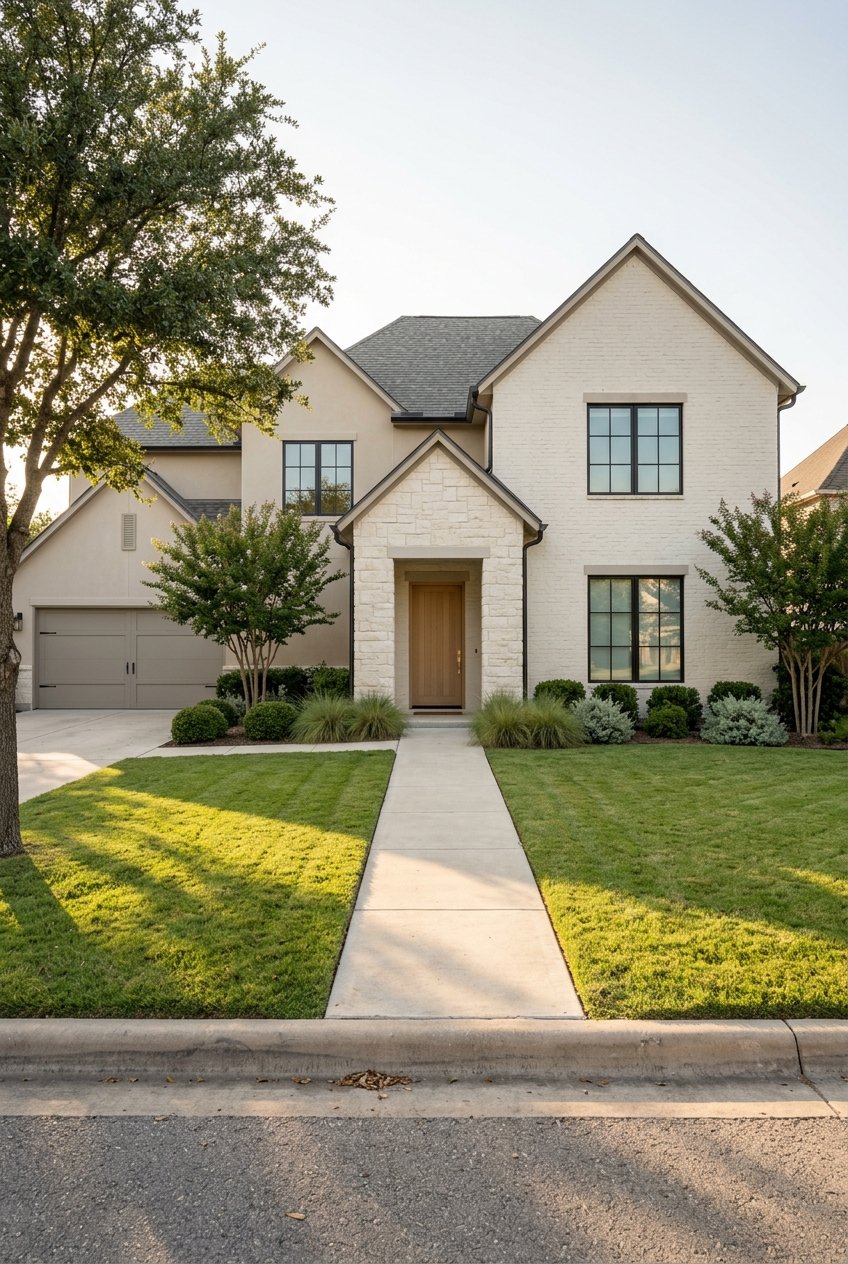
Housing in McKinney leans strongly toward detached homes. According to a city housing assessment, 71% of the city’s housing units are single-family detached homes. The rest include townhomes, duplexes, triplexes, fourplexes, and multifamily properties.
A lot of the housing stock is relatively recent. The same assessment reports that 88% of McKinney’s homes were built after 1990, and 33% were built between 2010 and 2019. In practical terms, that means many neighborhoods feel newer, with layouts and home sizes that align with what today’s buyers often want.
McKinney also remains an ownership-focused market. Recent Census estimates show an owner-occupied rate of 63.8%, a median owner-occupied home value of $471,800, and a median gross rent of $1,901. The city has also noted that 96% of owned units have three or more bedrooms, which helps explain why many buyers looking for extra space continue to consider McKinney.
What that means for buyers
If you want a home with more square footage, multiple bedrooms, and a neighborhood that feels established but not dated, McKinney has a lot to offer. Many parts of the city reflect the broader North Texas preference for larger single-family homes and suburban lot patterns.
If you prefer something with more historic character, you can also find older homes and architecture in and around downtown. That gives buyers a wider range of options than they might expect, especially if they are comparing McKinney to cities that feel almost entirely new.
Historic Downtown McKinney
Historic Downtown McKinney is one of the city’s biggest draws. It is described by the city as one of the oldest thriving historic downtowns in Texas, with more than 120 locally owned businesses, preserved 19th-century architecture, and a strong mix of shopping, dining, and cultural attractions.
This is not a downtown that only looks good in photos. It functions as a real part of daily life. You can spend an evening on the square, stop in for a meal, browse local shops, or enjoy one of the area’s historic and arts-focused destinations.
Key downtown attractions include:
- Chestnut Square Heritage Village
- Collin County History Museum
- The restored historic courthouse, now home to the McKinney Performing Arts Center
That blend of history and activity gives downtown a sense of place that can be hard to find in fast-growing suburban markets.
Downtown is easy to enjoy
Another practical advantage is that downtown is easy to use. Public parking is free, and the downtown trolley is also free from Thursday through Saturday. That may sound like a small detail, but it supports the kind of casual, repeat use that turns a downtown district into part of your normal routine.
Instead of feeling like a place you save for a special event, downtown can become part of your week. That could mean dinner out, a Saturday stroll, or a quick stop while spending time around the square.
Dining and local businesses
McKinney’s downtown food scene adds another layer to daily life. Visit McKinney highlights more than two dozen locally owned restaurants in the downtown district, and many build menus around seasonal local ingredients.
For residents, that means you have more than a collection of chain options near major roads. You also have a walkable district with local dining choices that contribute to the city’s identity. If you value having places with personality nearby, that can matter as much as square footage or commute times.
Parks, trails, and outdoor life
McKinney offers a strong parks and trails system that supports everyday outdoor routines. The city maintains almost 3,000 acres of parks and open space along with 80 miles of hike-and-bike trails. That gives you a wide range of options, whether you want a quick walk, more active recreation, or a place to spend part of the weekend.
Several parks stand out because they serve different kinds of outdoor use:
- Bonnie Wenk Park includes a dog park, inclusive play features, a fitness court, a pond, an amphitheater, and trail access.
- Towne Lake Park offers kayak rentals, fishing, disc golf, and access to the recreation center.
- Erwin Park is known for wooded open space, camping, and mountain bike trails.
If outdoor access is part of your lifestyle, this is one of McKinney’s strongest selling points. The park system is large enough and varied enough to feel useful in real life, not just attractive on a brochure.
Events and community rhythm
McKinney has a fuller community calendar than some buyers expect. Rather than feeling quiet except for a few holiday events, the city hosts a steady mix of recurring annual gatherings that help shape the local rhythm.
Annual events highlighted by Visit McKinney include:
- Arts in Bloom
- Texas Music Revolution
- Red, White, & BOOM
- Oktoberfest
- Home for the Holidays
- Parade of Lights
The McKinney Farmers Market at Chestnut Square also runs every Saturday year-round. That kind of consistency helps create a sense of routine for residents and gives the city more than a once-in-a-while event culture.
Schools and higher education context
If schools are part of your home search, it helps to know that McKinney is served by more than one district. The City of McKinney says McKinney ISD, Allen ISD, Frisco ISD, Melissa ISD, and Prosper ISD all work with the city on school safety and planning.
That matters because your school assignment may depend on where in McKinney you live. For buyers relocating from outside the area, this is one of the reasons it helps to look at specific addresses and neighborhoods closely rather than assuming the whole city falls under one district.
McKinney also offers local higher education access through Collin College. Both the Collin Higher Education Center and the McKinney Campus are located in the city, adding another layer of convenience for residents who want nearby educational options.
Commute and access
McKinney’s location supports commuting and regional mobility. With access to US 75, SH 121, and US 380, you can connect to other parts of Collin County and the greater Dallas area relatively easily.
The Census Bureau reports a mean travel time to work of 27.8 minutes. That does not tell the whole story for every household, of course, but it does reinforce McKinney’s identity as a commuter-friendly city with suburban appeal.
For many residents, that balance is the point. You can live in a city with more space, neighborhood variety, and a strong local identity while still staying connected to major employment centers across North Texas.
Who tends to like living in McKinney
McKinney often appeals to buyers who want more than just a house. They want a city where the neighborhood experience, outdoor options, and local amenities all support how they plan to live day to day.
You may find McKinney especially appealing if you are looking for:
- A primarily single-family home market
- Newer housing stock with larger homes
- A historic downtown that feels active and usable
- Strong park and trail access
- A steady calendar of events and local traditions
- Convenient access to Dallas and other North Texas job centers
It can also be a good fit if you are relocating and want a city with a clear sense of place. McKinney offers practical suburban convenience, but it does not feel interchangeable.
Final thoughts on living in McKinney
Living in McKinney often means getting a little more range in your lifestyle choices. You can spend your week in a newer neighborhood with easy highway access, then head to a historic square for dinner, the farmers market, or a local event. You can prioritize space and newer construction, or focus on character and proximity to downtown.
That flexibility is a big part of McKinney’s appeal. It offers the everyday function many buyers need, but it also provides the kind of local identity that helps a place feel like home.
If you are considering a move to McKinney and want clear, strategic guidance on neighborhoods, home styles, or how the city compares with other Collin County options, Vesta Schneider is here to help.
FAQs
What is the overall vibe of living in McKinney, Texas?
- McKinney feels like a fast-growing suburban city with a historic core, a strong single-family housing base, and a more established sense of place than many newer North Texas communities.
What kinds of homes are common in McKinney, Texas?
- Detached single-family homes are the most common housing type in McKinney, making up 71% of the city’s housing units according to a city housing assessment.
Does McKinney, Texas have a walkable downtown?
- Historic Downtown McKinney is one of the city’s most walkable and active areas, with locally owned businesses, dining, cultural attractions, free public parking, and a free trolley that runs Thursday through Saturday.
What are outdoor activities like in McKinney, Texas?
- McKinney offers almost 3,000 acres of parks and open space plus 80 miles of hike-and-bike trails, along with popular spots for dog walking, kayaking, fishing, disc golf, camping, and mountain biking.
Are there multiple school districts in McKinney, Texas?
- Yes. The City of McKinney says McKinney ISD, Allen ISD, Frisco ISD, Melissa ISD, and Prosper ISD all serve parts of the city depending on location.
Is McKinney, Texas a good option for Dallas-area commuters?
- McKinney can work well for commuters because it is about 30 to 32 miles north of Dallas and has direct access to US 75, SH 121, and US 380.