
If selling your home is part of your plans for 2027, you may already have a preferred timeline in mind. Perhaps you’re considering listing early in the year, or maybe you’d rather wait until the spring selling season.
Whatever your schedule looks like, there’s an advantage to getting organized before the new year begins.
With more properties available for buyers to consider, homeowners need to think carefully about how their property will compare with competing listings. Condition, presentation, and pricing can all influence whether a buyer decides to schedule a showing or keep searching.
Preparing in advance gives you more control over those factors without having to make rushed decisions.
The good news? Getting ready to sell doesn’t necessarily involve expensive renovations or months of disruption. Often, it’s about identifying the right priorities and creating a realistic plan.
Give Yourself Enough Time to Prepare
One of the most common challenges sellers face is underestimating how long it takes to get a property ready for the market.
Zillow suggests allowing approximately two to three months for pre-sale preparations. That timeframe provides room to evaluate the property’s condition, arrange professional services, complete necessary repairs, and coordinate the final steps before listing.
Research also shows that 78% of sellers completed at least one home improvement project before putting their property on the market.
However, that doesn’t mean most homeowners undertook major remodeling projects.
In fact, interior painting was among the most frequently completed improvements, as illustrated below.
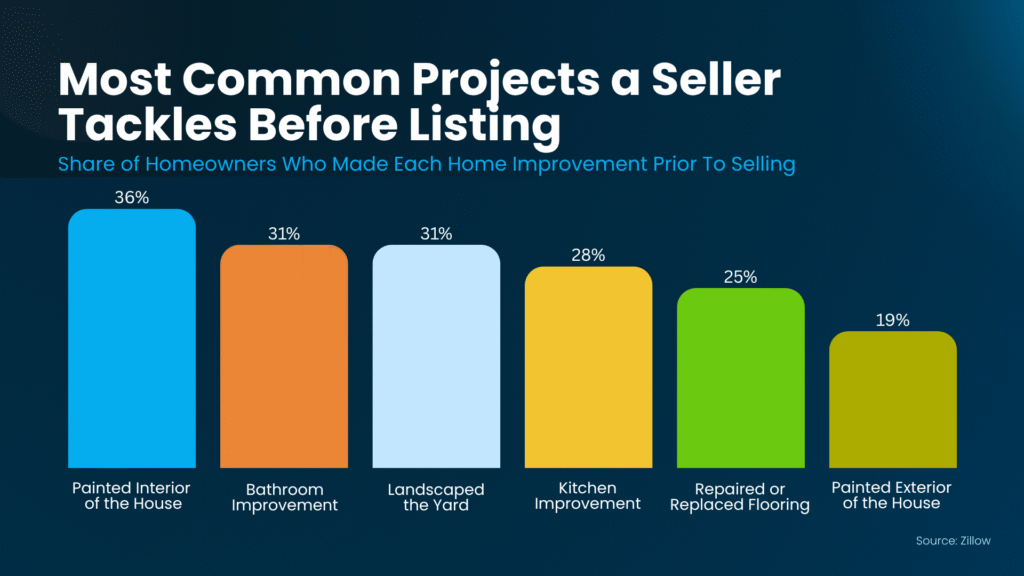
The takeaway isn’t that every home needs a fresh coat of paint or a long list of upgrades.
Instead, it’s that preparing a property often involves a combination of relatively manageable improvements.
The best approach depends on your home’s current condition, your budget, and the expectations of buyers in your particular neighborhood.
1. Understand What Buyers Value Before Spending Money
Before replacing countertops, updating fixtures, or starting a remodeling project, consider whether those changes will actually improve your property’s marketability.
Not every improvement produces a worthwhile return when it’s time to sell.
For example, a homeowner might assume an outdated kitchen needs a complete renovation. But if comparable homes in the neighborhood are selling successfully with similar finishes, a full remodel may not be necessary.
In other cases, simple improvements such as fresh paint, updated lighting, or minor repairs could make a meaningful difference in how buyers perceive the property.
This is where local market knowledge becomes especially valuable.
A real estate professional can help evaluate competing listings, recent sales, and buyer expectations to determine which improvements deserve attention.
Rather than making upgrades based on personal preferences, you can focus on changes that support your overall selling strategy.
That distinction can save both time and money.
2. Identify Potential Problems Before Buyers Do
Even a well-maintained property can have issues that aren’t immediately visible.
An aging air conditioning system, minor plumbing concerns, roof wear, or electrical problems may not interfere with everyday living. However, those same issues could become important during a buyer’s inspection.
One way to prepare is by considering a pre-listing home inspection.
Unlike the inspection a buyer typically orders after entering into a contract, a pre-listing inspection gives the homeowner an opportunity to learn about potential concerns before the property goes on the market.
According to Angi, a pre-listing inspection typically costs $300-600 and that can be money well spent. As the National Association of Realtors (NAR) explains:
“An inspector will be able to give you a good indication of the trouble areas that will stand out to potential buyers, and you’ll be able to make repairs before open houses begin.”
Knowing about potential problems early allows you to decide which repairs to complete, obtain estimates, and budget accordingly.
For example, if your HVAC system needs servicing or your roof requires minor maintenance, addressing those concerns before listing may help prevent complications during negotiations.
An inspection doesn’t guarantee that a buyer’s inspector won’t identify additional issues. However, it can reduce uncertainty and help you approach the transaction with a clearer understanding of your property’s condition.
It also gives you time to evaluate your options rather than making expensive decisions under contract deadlines.
3. Separate Early Preparation From Final Presentation
Some tasks make sense to complete several months before listing. Others are most effective when scheduled shortly before the property is photographed and shown.
Understanding the difference can make the entire process more manageable.
Projects worth addressing early may include repairs, maintenance, contractor estimates, and improvements that require advance scheduling.
You can also begin sorting through belongings, organizing storage spaces, and deciding what you plan to keep, donate, or discard.
Decluttering is particularly helpful because it serves two purposes. It creates a cleaner, more spacious appearance for potential buyers while also reducing the amount of packing you’ll need to do when moving.
Final presentation tasks, on the other hand, are usually better completed closer to the listing date.
These may include professional cleaning, staging, fresh landscaping, minor paint touch-ups, and preparing the home for photography.
Completing these finishing touches at the right time helps ensure your property looks its best when buyers first see it online and in person.
Redfin emphasizes the importance of preparation:
“Smart preparation leads to a smoother sale, stronger offers, and fewer surprises during closing. . . Homes that are clean, well-staged, priced right, and professionally photographed tend to sell quickly.”
While no preparation strategy can guarantee a particular sale price or timeline, presenting a well-maintained property can help buyers feel more confident about what they’re purchasing.
4. Build Your Selling Strategy Around Your Local Market
Preparing the physical property is only one part of getting ready to sell.
It’s equally important to understand the market conditions you may encounter when your home becomes available.
For homeowners in McKinney, Frisco, Prosper, Celina, and surrounding North Texas communities, buyer preferences and competition can vary considerably by neighborhood and price range.
A home in an established neighborhood may attract different buyers than a newer property in a growing master-planned community.
Inventory levels, nearby new construction, recent comparable sales, and the condition of competing homes can all influence your listing strategy.
This is why preparation should go beyond making the property look appealing.
Reviewing local market activity in advance can help you establish realistic expectations about pricing, potential competition, and the best way to position your home.
It also gives you an opportunity to adjust your plans as market conditions evolve heading into 2027.
A Simple Timeline for Getting Your Home Market Ready
You don’t have to complete every task at once. Breaking the process into stages can help you stay organized.
Two to three months before listing
- Meet with a local real estate professional to discuss your goals and timeline.
- Review your home’s condition and identify improvements worth considering.
- Schedule inspections or contractor consultations if appropriate.
- Begin decluttering and organizing storage areas.
One to two months before listing
- Complete priority repairs and maintenance.
- Address recommended cosmetic improvements.
- Review comparable properties and current market activity.
- Begin planning for staging, photography, and marketing.
During the final weeks
- Deep clean and prepare the property for showings.
- Complete landscaping and finishing touches.
- Arrange professional photography.
- Finalize your pricing and marketing strategy based on current market conditions.
This timeline is flexible. Some properties require very little preparation, while others may benefit from additional time.
The objective is to make steady progress without creating unnecessary pressure or expenses.
Final Thoughts
Selling a home is a significant decision, and the preparation process deserves just as much attention as the listing itself.
If 2027 is your target year, the remaining months of 2026 offer an opportunity to evaluate your property, understand your options, and make informed decisions about what comes next.
You don’t need to renovate every room or have everything figured out immediately.
What matters is knowing which steps will make the biggest difference for your particular home.
Whether you’re planning to sell in McKinney, Frisco, Prosper, Celina, or another North Texas community, having a clear strategy can help you approach the market with greater confidence.
Thinking about selling your home in 2027? Fill out the intake form below and let’s discuss your property’s current condition, what buyers in your area are looking for, and how to create a preparation plan that works with your timeline.
Selling Soon | Vesta Schneider Real Estate
Looking For a New Home | Vesta Schneider Real Estate