If you pulled up the Allen, Texas market snapshot right now, you would see a city that looks like it is cooling gently. Median sale prices down a few percentage points. Inventory actually shrinking. A close-to-list ratio still north of 96 percent. Nothing that reads as alarming.
Then you'd look at Twin Creeks, the golf-course community that has spent two decades as Allen's answer to "the good neighborhood," and see a very different number. Depending on which data source you check, resale prices there are down somewhere between 12 and 18 percent year over year. That is not a soft landing. That is the steepest correction happening anywhere in the city, in the one neighborhood most people would have bet was the safest.
The gap between those two numbers is the actual story. It tells you something the citywide median can't: in a market where buyers finally have leverage, the cost of being an older, established address without a builder standing behind it has gone up, not down.
The citywide number is telling a milder story than it should
Start with what the city as a whole did in the second quarter of 2026, April through June. The median sale price came in at $505,000, down 3.6 percent from the same quarter a year earlier. Price per square foot fell 5.3 percent to $210.68. Median home size also shrank, from 2,610 square feet to 2,506. All three numbers point the same direction, which is a sign the softening is real and not a statistical trick caused by a shift in what happened to sell that quarter.
But look closer at the supply side and the picture gets more interesting. Active listings actually fell 11.4 percent to 366 homes, closed sales dropped 8 percent to 334, and months of supply held at 3.9, which is balanced territory, not a glut. Homes are still closing within about 3.4 percent of original list price on average. That is not the profile of a neighborhood in distress. It is the profile of a market where sellers who don't have to move are sitting on their hands, keeping the listing pool tight even as prices drift down.
None of that explains a 17 percent drop in one specific neighborhood. For that, you have to leave the citywide average and go look at what is actually selling in Twin Creeks.
What's happening at the golf course is a different market entirely
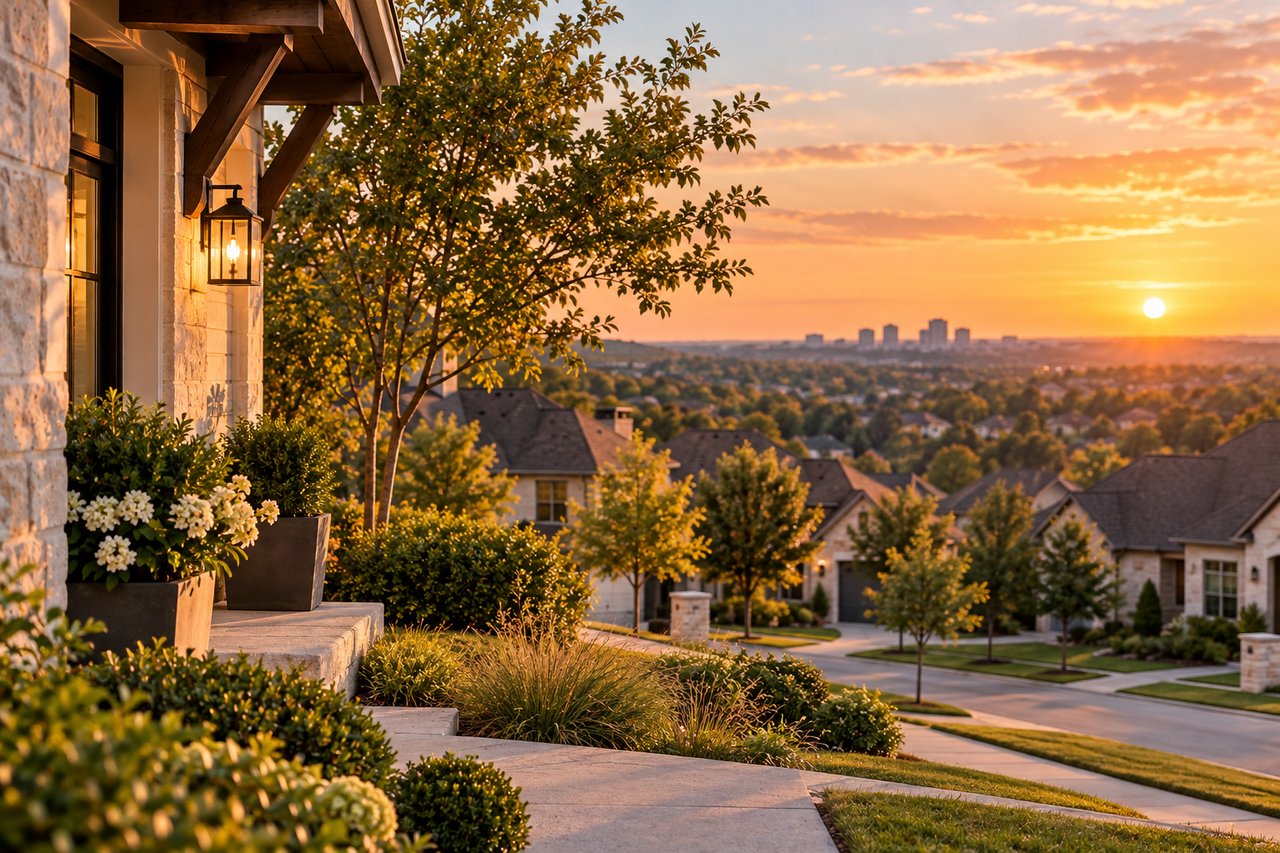
Twin Creeks is built around an 18-hole course designed by Arnold Palmer, with Rowlett Creek running through several of its holes and creating the water hazards the course is known for. Wimberly Place, the neighborhood's only gated subdivision, sits closest to the fairways. It is the kind of address that, for most of its history, held its value because there was nothing quite like it in Allen.
That premium is thinning out. Resale data through March 2026 put the median sale price at $590,000, down 17.7 percent from a year earlier. A separate trailing 12-month read put it at $573,650, down 12 percent from the prior 12-month period. The two sources don't agree on the exact percentage, but they agree on the direction and the size of the move, and both numbers are dramatically larger than the citywide 3.6 percent decline.
Here is the detail that makes this more than a coincidence: Twin Creeks' median sale price sits almost exactly inside the $500,000 to $749,000 band that already makes up 33.3 percent of all Allen closings, the single largest price tier in the city. That is not a niche luxury segment absorbing a one-time shock. It is the core of Allen's move-up market, and it is the specific tier where the correction is concentrated.
Push further up Twin Creeks' price range and the pattern holds. The neighborhood's estate-sized homes run as high as roughly $4 million, and the broader Allen luxury tier, homes over $750,000, is where market times run longest and buyers have the most room to negotiate. The bigger and older the house, the more exposed it currently is.
| Segment | Recent median | Year-over-year change | Notes |
|---|---|---|---|
| Allen citywide (all resale) | $505,000 (Q2 2026) | down 3.6% | Inventory down 11.4%, 96.6% close-to-list ratio |
| Twin Creeks resale | $590,000 (Mar 2026) | down 12% to 17.7%* | Sits inside Allen's largest price band |
| New construction citywide | roughly $540,000 | builder-set, incentive-adjusted | Rate buydowns and credits common |
*Range reflects two different data sources measuring slightly different windows.
Why the builder down the road isn't losing ground the same way
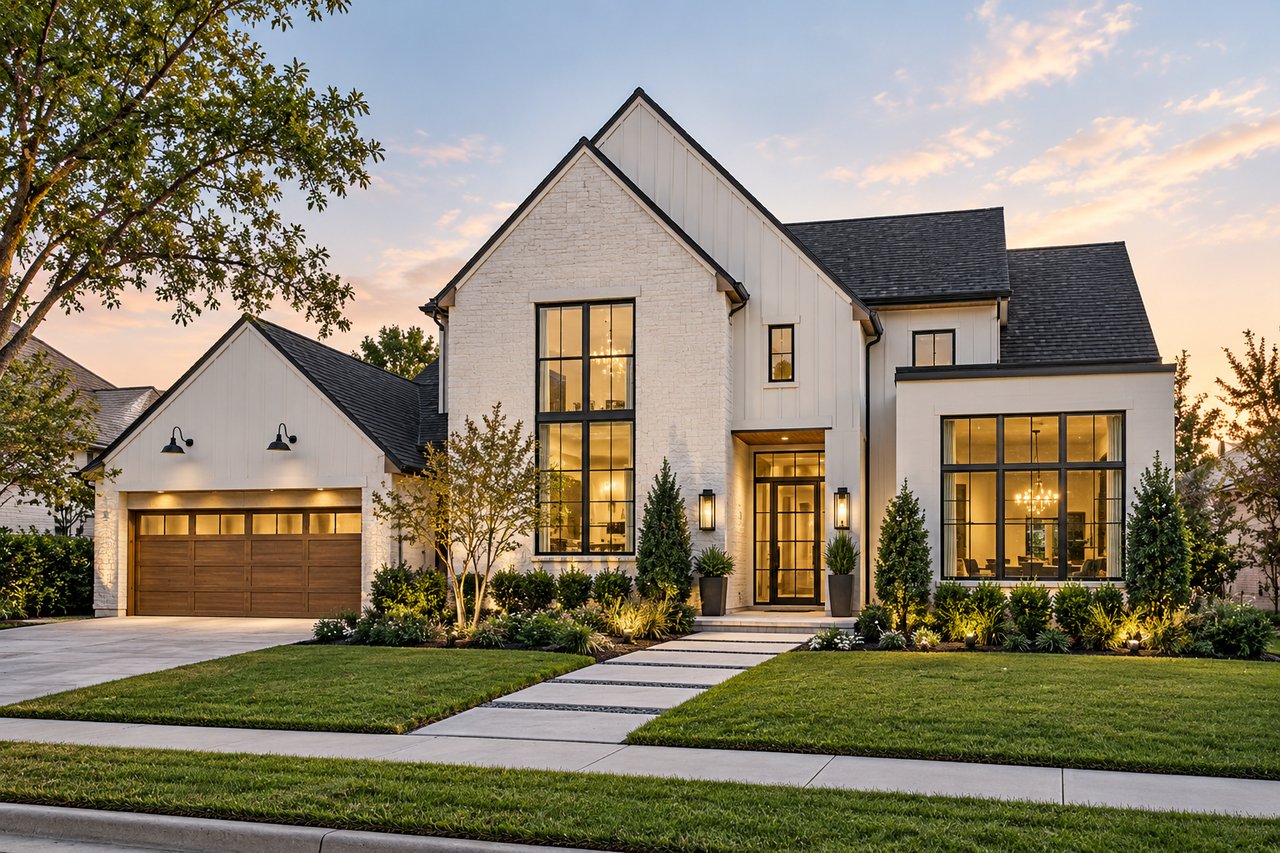
New construction in Allen is a smaller, more scattered slice of the market than in fast-growing cities north of Highway 380, but it hasn't disappeared. Shaddock Homes is actively selling in Custer Ridge Estates. Drees Custom Homes has a townhome community called Chelsea Commons. CB JENI Homes is building townhomes elsewhere in the city. New home listings across Allen carry a median around $540,000, roughly in line with or even below where Twin Creeks resale sits.
The detail worth sitting with: one of the newer townhome communities marketed in Allen is even called Twin Creeks Watters, borrowing the neighborhood's name for brand-new construction. Buyers still want the Twin Creeks address. They just increasingly want it attached to a new roof, a new HVAC system, and a builder who can buy down their mortgage rate, not a twenty-year-old golf-course house that needs all three replaced out of pocket.
That is the actual mechanism behind the gap. A builder facing a slow buyer can offer a rate buydown, a design-center credit, or closing cost assistance and hold the sticker price steady while quietly lowering the real cost of the loan. A resale seller in an established subdivision has exactly one lever: the list price. When a builder can make the effective monthly payment cheaper without touching the number in the listing, and a resale seller can only cut the number itself, the resale seller loses the negotiation before it starts. Multiply that dynamic across a neighborhood with a median home age around 25 years citywide, where deferred maintenance is common and buyers are pricing in the cost of a new roof or HVAC system themselves, and a modest citywide correction turns into a much sharper one in the neighborhoods carrying the most deferred maintenance and the least builder support.
What this means if you're weighing Allen against a newer address
For a buyer comparing Allen to Prosper, Celina, or the newer pockets of McKinney, the lesson isn't that Twin Creeks is a bad bet. It's an established, amenity-rich community in a city with limited new supply, which historically supports long-term price recovery once financing conditions ease. The lesson is that right now, the asking price on an older golf-course home is not the real number to negotiate from. HOA dues in Twin Creeks already vary from roughly $60 to $400 a month depending on the subdivision, and the home's age means an inspection is likely to surface real, negotiable items. A seller anchored to a 2022 comp is not going to move on price easily, but the data says they should, and a buyer who understands that has more leverage walking in than the listing price suggests.
For a seller in an older Allen subdivision, the takeaway is less comfortable but more useful. Pricing to last year's comp, or worse, to a 2022 peak, is the single most common mistake happening in this market right now. The homes that are still closing efficiently, in around 35 to 40 days with a close-to-list ratio near 96 to 97 percent, are the ones priced to current absorption, not to memory. If you're weighing whether to list this fall, an accurate read on where your specific subdivision sits, not the citywide median, is the number that should shape your strategy. That is exactly the kind of neighborhood-level pricing conversation worth having before a home goes on the market, and it's a core part of how we approach a home valuation in Allen right now.
If you're relocating in and trying to decide where in Collin County to focus your search, the same logic applies in reverse. The Allen neighborhood guide is a good place to start narrowing that search, because the city-level story and the subdivision-level story are not the same market this year.
A few questions worth asking before you act on either side of this
Does a double-digit decline mean Twin Creeks is losing long-term value? Not necessarily. The city's limited new construction pipeline and established school infrastructure have historically supported price recovery once rate conditions improve. What's happening now reads more like a correction concentrated in older inventory than a structural decline in the neighborhood itself.
Should I compare a new-construction listing price directly to a resale listing price? Not without adjusting for incentives. A builder's $540,000 sticker price with a rate buydown and a design credit can carry a lower effective monthly cost than a resale home listed at the same number with no comparable concession attached.
Is this pattern unique to Twin Creeks, or does it show up elsewhere in Allen? The mechanism, older inventory facing builder-subsidized competition, applies most directly to established, amenity-anchored subdivisions in the $500,000 to $749,000 band, which is Allen's largest price tier. Twin Creeks is the clearest example because of how much of its inventory sits inside that exact band.
Numbers like these change how a negotiation should start, on either side of the table. If you're trying to figure out what a specific Allen subdivision is actually worth this fall, or how to structure an offer against a seller who's still pricing off an old comp, Vesta Schneider can walk through the subdivision-level data with you before you make a move.