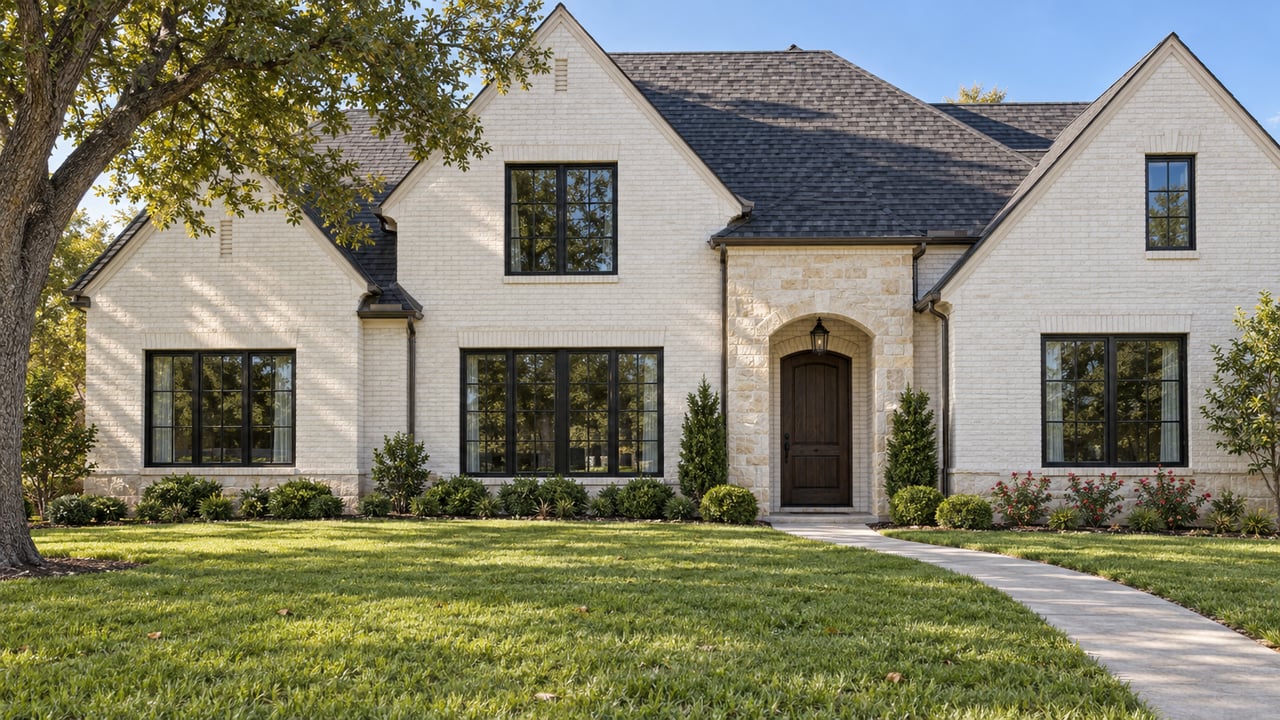
Which house would you trust more, sight unseen: a nine-year-old build in Trinity Falls, or a hundred-year-old cottage two blocks off the historic square? Most buyers answer without pausing, and most get the timing backward.
In McKinney, foundation risk tracks the soil under a house and how that soil was handled during construction, not the year stamped on the deed. Right now, the math favors the older homes.
The Line on the Inspection Report That Starts a Clock
Here's the moment this actually matters to a buyer or seller. A general home inspector walks a McKinney property during the option period and writes one line: possible foundation movement, recommend evaluation by a specialist. That single sentence is common enough around the city that it shows up on a meaningful share of general inspections, and it hands the buyer a short window, whatever is left of the option period, to bring in a structural engineer and figure out what the note actually means before the contract's repair-negotiation deadline closes.
What helps in that window: calling a structural engineer as early in the option period as possible, asking the seller for any documentation of prior foundation work along with a transferable warranty if one exists, and getting an elevation survey in writing rather than relying on a verbal opinion. A written scope with real numbers is what actually moves a repair-amendment conversation. If you're the seller, running that same survey before you list saves you from losing leverage to someone else's option period later.
What's Actually Moving Under the House
McKinney sits on the Blackland Prairie, a band of expansive clay locally nicknamed black gumbo that swells when it's wet and shrinks hard when it dries. Every wet-to-dry cycle puts pressure on whatever is sitting on top of it, and the region has had a few sharp examples of what that looks like in practice. The 2011 and 2022 droughts each brought a jump in foundation calls across the city, including from homes that had never shown a problem before, because the clay simply pulled away from slabs faster than concrete could adjust.
The soil itself isn't uniform across town. The city's west side tends toward rockier ground, while the east leans more heavily clay, and both conditions call for a site-specific look rather than a one-size answer. That distinction matters more than most buyers realize when they're comparing a listing in McKinney proper against one a few miles in either direction.
Two Foundations, Two Different Clocks
This is where the age assumption breaks down. Most of McKinney's rapid growth over the past two decades happened on graded and filled lots, the kind of site prep that compacts soil quickly to make way for a subdivision. Neighborhoods like Stonebridge Ranch, Craig Ranch, Eldorado, and Trinity Falls sit largely on post-tension concrete slabs poured over that fill. Fill soil keeps settling for years after a builder leaves, and homes in the five-to-fifteen-year range are exactly the ones now showing their first corner drop or a stair-step crack above a window, often right around the same years a builder's structural warranty runs out.
Homes near the historic downtown square tell a different story. Many were built on pier and beam foundations decades before modern grading standards existed, and they've already been through generations of the same shrink-swell cycle that's just starting to test the newer slabs. That doesn't make them immune. Pier and beam foundations fail in a slower, different way, through wood rot, insect damage, and moisture accumulating under the floor rather than a sudden slab shift, which is why crawl space condition matters more there than elevation numbers alone.
| Newer slab subdivisions (built roughly the last 20 years) | Century-old homes near the historic square | |
|---|---|---|
| Typical foundation | Post-tension concrete slab on graded, filled lots | Pier and beam |
| When movement tends to show up | Often years 5 to 15, as fill soil keeps compacting | Already cycled through decades of shrink-swell |
| What an inspector usually flags | A dropped corner, stair-step brick cracks, a door that sticks near one wall | Sagging or soft floor spots, moisture and rot beneath the house |
| Rough repair cost range | Commonly $2,500 to $15,000 depending on pier count | Full beam and joist repair often starts near $3,900 |
| What to ask for before waiving option period | Elevation survey, engineer's report, transferable warranty | Crawl space inspection, moisture barrier condition, beam repair history |
What the Disclosure Form Actually Requires
A repaired foundation is still a foundation that had a problem, and Texas law treats it that way. Texas Property Code Section 5.008 requires sellers of previously occupied homes to complete a written disclosure covering known structural conditions, including prior foundation repairs, even if the home has been stable for years since. Checking the "as-is" box on a purchase contract limits the seller's obligation to make repairs. It does nothing to limit the obligation to say what's wrong, and Texas courts have been consistent on that point.
For sellers, this cuts a different way than it might seem. A documented repair with an engineer's report and a transferable warranty is frequently viewed more favorably by buyers than a home with no known history at all, simply because it removes the guesswork. If you've had foundation work done, the paperwork is the asset, not the liability.
What Insurance Will and Won't Cover
According to Solid Foundation DFW, standard Texas homeowners policies exclude foundation damage caused by soil movement, which is the primary driver of foundation issues across McKinney. McKinney Foundation Repair TX notes one narrow exception worth knowing: if settlement is traced to a plumbing leak under the slab rather than ordinary clay movement, that scenario can sometimes be covered, provided it's documented and a claim is filed before repair work begins. That distinction is worth raising with an inspector or engineer if a slab issue shows up, since it changes who pays for what.
Before You Waive the Option Period
A few questions are worth asking regardless of which side of the transaction you're on.
- Is there a prior foundation repair, and if so, is there an engineer's report and a transferable warranty attached to it?
- If the home is in a subdivision built in the last two decades, is there any record of how the lot was graded and compacted before construction?
- Has an elevation survey been run recently, and can you see the actual numbers rather than a pass or fail summary?
- For a pier and beam home, what does the crawl space look like, and when was it last inspected for moisture or rot?
- Is the drainage around the foundation directing water away from the slab, or pooling against it?
None of these questions require a specialist to ask. They just require asking before the option period runs out rather than after.
If you're weighing a purchase in one of McKinney's newer subdivisions or a character home near the square, the neighborhood details are only half the picture. The other half is what's underneath it, and that's a conversation worth having early rather than during a scramble.
A Few Questions Worth Asking
Does a documented foundation repair make a home harder to sell? Not usually. A repair backed by an engineer's report and a transferable warranty tends to reassure buyers more than an undisclosed or unknown history would.
If my home shows movement but I don't have a leak, is there any insurance angle at all? Generally no. Soil movement on its own falls outside standard coverage. The exception is damage traced specifically to a plumbing leak, and only if it's documented and claimed promptly.
Do I need to worry about foundation issues if I'm buying new construction? It depends less on the build date and more on how the lot was prepared. Homes on fill soil can begin showing movement well within their first decade, which is why an elevation baseline early in ownership is worth having on file even for a newer home.
Are pier and beam homes automatically riskier than slab homes? They fail differently, not necessarily more. Pier and beam issues tend to be slower and moisture-driven, while slab issues on newer fill soil can appear suddenly and require pier work sooner than owners expect.
If you're preparing to buy or sell in McKinney and want a clearer read on how a specific property's foundation history, soil location, or age should shape your negotiating position, Vesta Schneider is a straightforward point of contact for that conversation before you're inside an option period countdown.
This article is general information, not legal, tax or financial advice. Consult a qualified professional about your situation.